
 I'm a customer
 I work at Energievolledig
 Solar panels
 Home battery
 EV charger
 Hybrid heat pump
 Radiators and floor
 Gas boiler
 Heat pump water heater
 Air conditioning
 Insulation
 Smart control
 Energy contract
Insulation
Keep the heat in.
Insulating is the first step. You heat less, and a heat pump then runs more efficiently.
The home scan is free. The price follows after the survey.
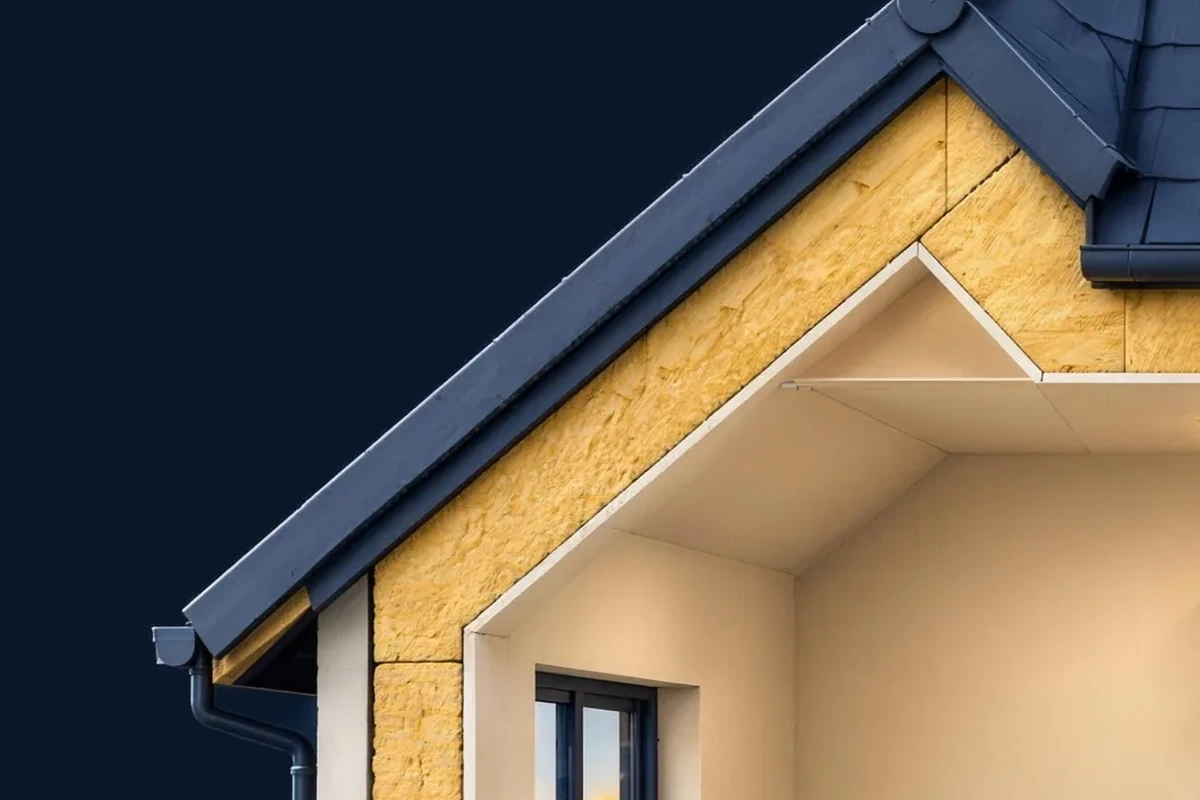
Cavity wall and crawl space often in one dayISDE subsidy handled by usYour quote within 24 hours
Insulate first, then heat.
Making your home sustainable goes in steps. If you insulate first, you need less heat. A heat pump can then run at a lower temperature.
- 1Insulate. Your home keeps the heat in.
- 2Heat pump. It runs more efficiently in an insulated home.
- 3Solar panels. For the power you still need after that.
What your home needs first depends on the year it was built and what has already been done.
Four places to insulate.
Heat leaks away through the roof, the walls, the floor and the windows. You can have them done separately or together.
Roof
Warm air rises. An insulated roof keeps that heat inside.
Wall
If your home has a cavity wall, it can often be insulated in one day.
Floor
Insulation under the floor or on the bottom of the crawl space. The floor feels less cold.
Glazing
Single or old double glazing lets a lot of heat through. Insulating glass keeps it in.
The adviser looks with you at which place comes first.
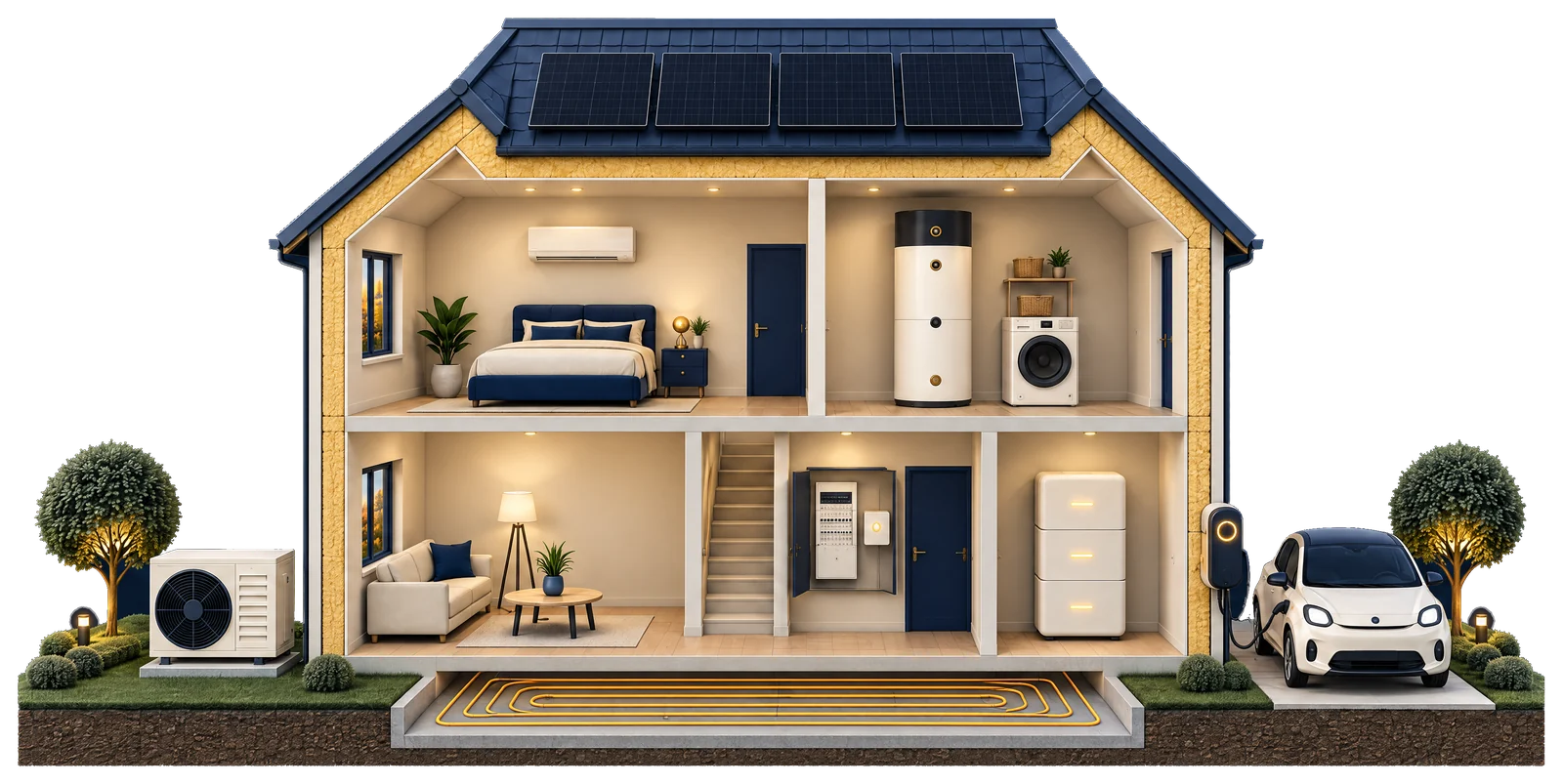
Works with the rest of your home.
Insulation makes the rest of your home more efficient. That goes for the heat pump in winter and the air conditioning in summer.

What we arrange for you.
You don't have to work anything out yourself. The price depends on your home, so you get it after the survey.
ISDE subsidy
Homeowners can get the Dutch ISDE subsidy for insulation. We handle the application after installation.
One point of contact
Part is done by our own team, part by an approved partner. You arrange everything with us.
Pay monthly
With a Warmtefonds loan you spread the cost over 7 to 20 years.
Let op! Geld lenen kost geld. (Borrowing money costs money.)
From survey to subsidy.
At every step you know what happens and who to call.

Home scan
Describe your home in a few minutes and see right away what fits.

Survey
The adviser looks at where your home loses the most heat.

Quote
Within 24 hours, with the price for your home.

Insulating
Our team or an approved partner insulates what is in your quote.

Subsidy
After that we apply for the ISDE for you.
Where do I start with insulation?
That depends on your home: the year it was built and what is already insulated. The adviser looks at where the most heat leaks away.
What does insulation save?
In an end-of-terrace house, the cavity wall saves the most, then the roof. Milieu Centraal calculates this for an average end-of-terrace house, from no insulation to good insulation, with gas at € 1.37 per m³.
Cavity wall. About 400 m³ of gas a year, roughly € 550.
Roof. A pitched roof, about 340 m³ of gas, roughly € 480.
Glazing. From single glazing to HR++, about 260 m³ of gas, roughly € 350. From ordinary double glazing to HR++, about 70 m³, roughly € 90.
Floor. About 130 m³ of gas, roughly € 180.
What you save depends on your home and what you pay for gas.
Can my home be insulated?
That mostly depends on the year it was built. According to Milieu Centraal:
Roof. Homes built before 1975 got no roof insulation. Until 1992 it was usually a thin layer of 3 to 5 centimetres, which you can improve.
Cavity wall. Homes built after 1920 usually have a cavity. Until 1975 it was usually left empty. From 1975 to 1991 it was almost always insulated, but it can be better.
Floor. Homes built before 1983 usually have no floor insulation. Insulating under the floor works if your crawl space is at least 35 centimetres high.
Glazing. Homes built before 2000 did not get HR++ glass. The bedrooms of homes built up to 1992 may still have single glazing.
For the ISDE subsidy, your home must have been built before 2019.
How can I tell if I already have insulation?
You can check the roof, floor and glazing yourself. For the cavity wall you need an insulation company. According to Milieu Centraal:
Roof. Look behind the panels in the attic or under a roof tile. You will see whether there is insulation and how thick it is.
Wall. Measure how thick your wall is next to a window or door. If it is thicker than 20 centimetres, it is probably a cavity wall. An insulation company checks whether there is insulation in it.
Floor. Open the hatch to the crawl space and look for insulation against the underside of the floor.
Glazing. Look at the strip between the panes. If it says HR, HR+ or HR++, you have insulating glass. If it says nothing, it is probably ordinary double glazing.
How long does it take?
A cavity wall and the crawl-space floor are often done in one day. For the roof and the glazing it depends on your home.
Do I get a subsidy?
Often, yes, through the ISDE. As a homeowner you get a fixed amount per m². For one measure, RVO gives:
Roof € 16.25, cavity wall € 5.25, façade € 20.25, floor € 5.50, crawl-space bottom € 3, HR++ glass € 25. Triple or vacuum glass in new frames € 111.
If you take a second measure within 24 months, the amount doubles. A heat pump also counts as a second measure. Your home must have been built before 2019, and there is a minimum, such as 20 m² of roof or 10 m² of cavity wall. You apply after the work is done, and we do that for you.
What does insulation cost?
That depends on your home and which part you insulate. You get the price after the survey.
Do I need insulation for a heat pump?
A heat pump works most efficiently at a low temperature. The better your home is insulated, the easier that is. A hybrid heat pump also works in a home that is not yet fully insulated, because the gas boiler steps in when it is cold.
Do you do it yourselves?
Part is done by our own team, part by an approved partner. You have one point of contact: us.